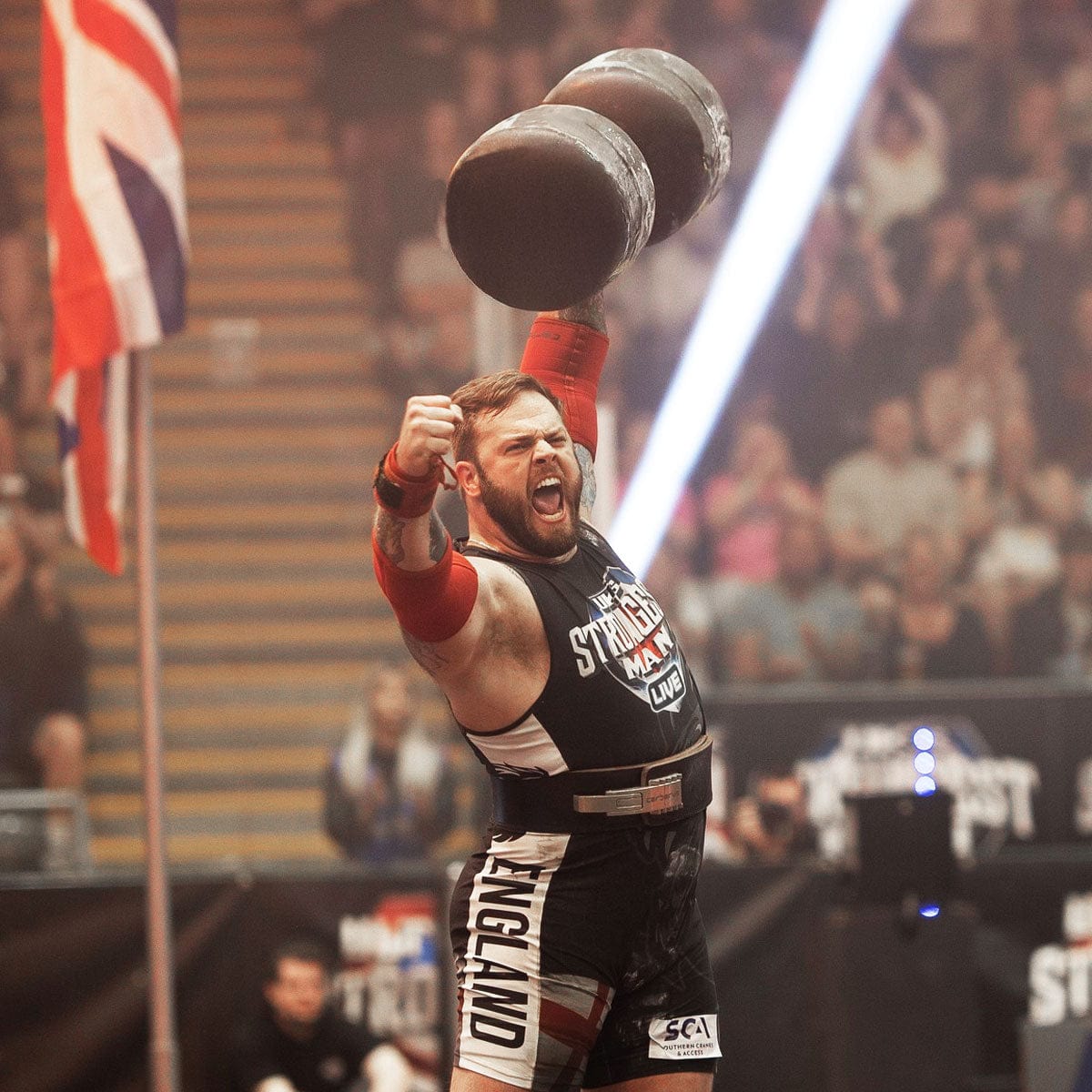
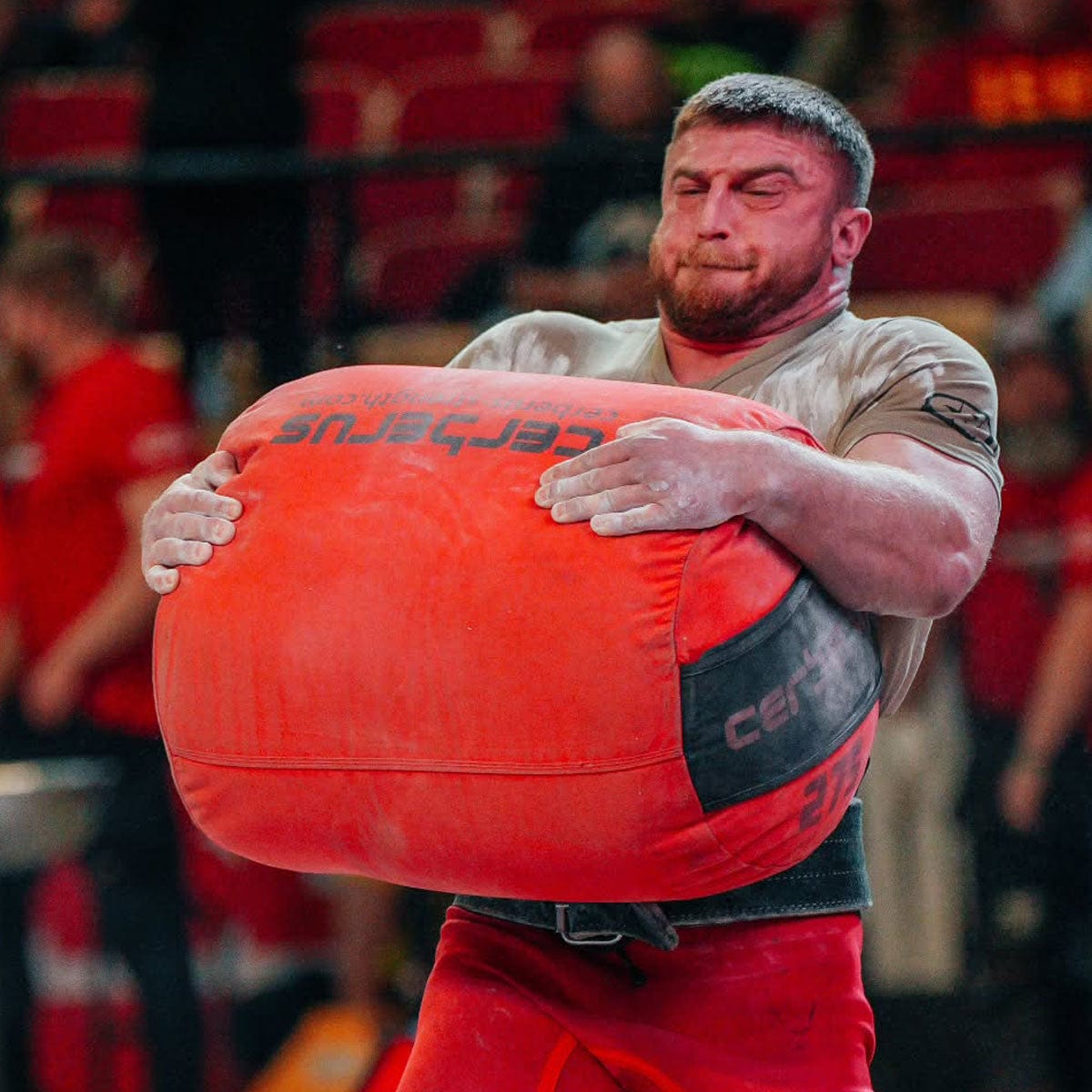


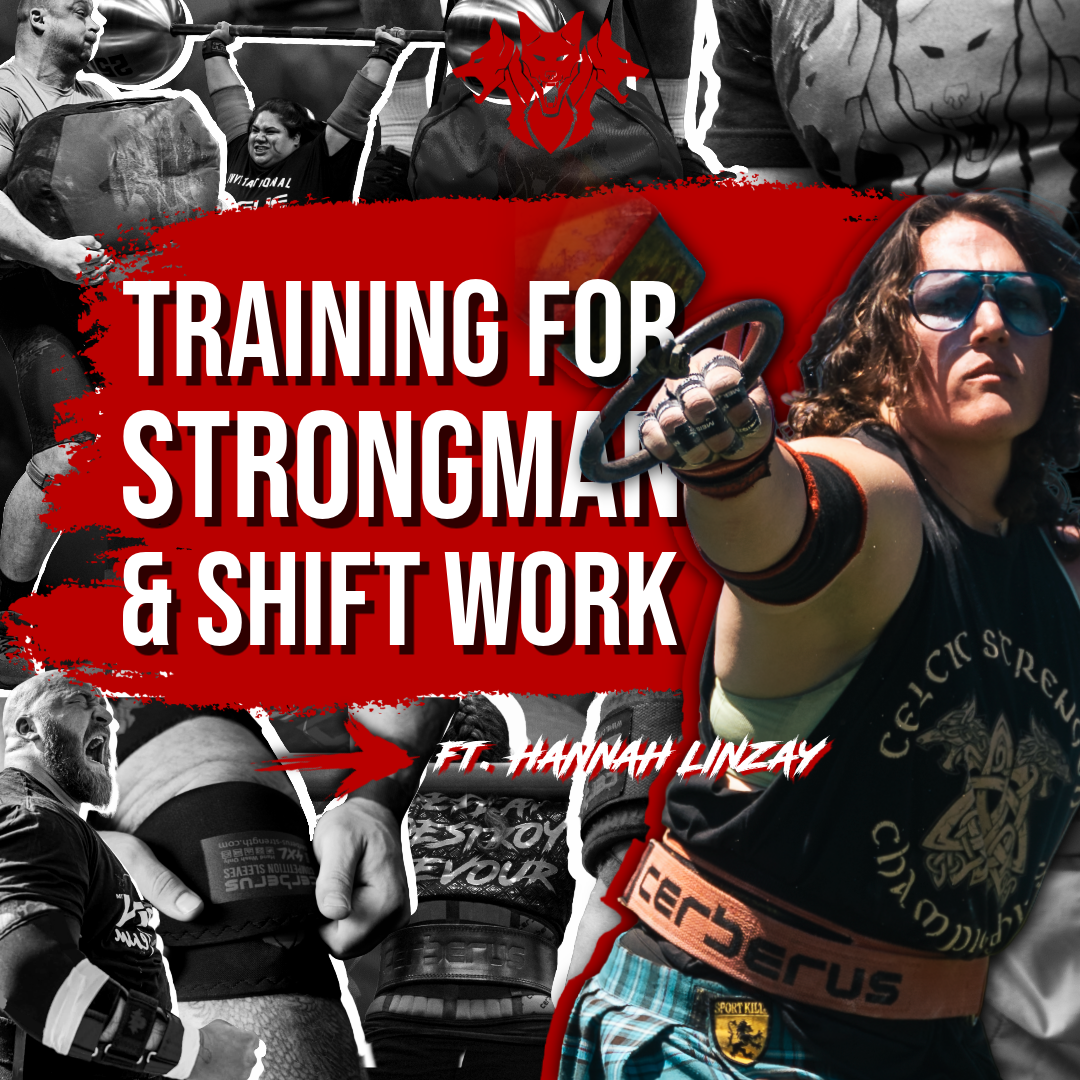
How to Train for Strongman When You Work 12-Hour Shifts
By Swampy (Hannah Linzay)
Let’s be honest: strongman is hard enough when training is your biggest physical demand of the day. But what happens when you have to go spend 12 hours working your ass off before you even touch a barbell?
A lot of people who train and compete in strongman don’t have to work manual labor jobs. They don’t have to work 12-hour shifts, rotating shifts, or swing shifts. But there are a whole lot of us who do—or did.
I’ve been asked more times than I can count how I managed to work a physically demanding job while competing at the highest levels of strongman.
And honestly? Looking back now, I’m not entirely sure how I did it.
I think I was just really damn hard-headed.
I worked in a steel mill for four years while competing at the top of my strongman career. I worked plenty of 12-hour shifts, plenty of nights, and plenty of days where the job itself felt like a training session.
Thankfully, I recently received a promotion at work, so I no longer have to work a manual labor job. But those years taught me a hell of a lot about training, recovery, and what it actually takes to compete when life doesn’t revolve around your training schedule.
I’m sure other athletes have their own methods, but this is what worked for me.
Sleep Is Training
If you take nothing else from this article, take this: sleep and nutrition come first.
And if I had to pick one, I would choose sleep over training.
That might sound crazy coming from a competitive strongman, but there were plenty of times when the smartest thing I could do for my training was not train.
There were days and nights working in the caster where things went horribly wrong. We’d have a breakout and have to rebuild the entire caster in temperatures reaching 165 degrees while wearing three layers of FR clothing. After a shift like that, I might have been scheduled to train, but sometimes I knew the truth.
If I walked into the gym that night, I was going to take more from my body than I was going to put into my training.
So I’d go home, shower, and go straight to bed. And I didn’t feel guilty about it. If the next shift allowed it, I’d make that training session up later.
That’s an important distinction: resting isn’t quitting.
My schedule was a 4-on, 4-off rotation—four days on, four days off, four nights on, four days off, and then back to days. It was brutal.
Because of that, I stopped trying to force my training into a traditional seven-day week. I trained around my work schedule instead. My training essentially ran on an eight-day cycle.
During my work stretch, I would train twice. Those sessions were usually about an hour to an hour and a half and focused on one main movement followed by accessories.
Then, when I was off, it was time to get after the events.
Those sessions could last anywhere from 2½ to 4 hours depending on what we were doing, and that includes loading equipment, setting everything up, training, breaking everything down, and cleaning up.
That was where I got my big training in.
Eat Like You Work
The next big one is nutrition.
Calories. Calories. Calories.
If you’re working manual labor for 12 hours, especially in a hot environment, you cannot eat like someone sitting behind a desk for eight hours. Your body is burning fuel all day, and you have to replace it.
I drank a lot of my calories because sometimes drinking them was simply more practical than trying to sit down for a meal.
Lemonade. Fairlife. Egg whites mixed with protein powder. Karbolyn during training.
Whatever got the calories in.
I generally ate three to five meals a day depending on what work allowed.
And that’s the important part: what work allowed.
We didn’t have nice, predictable breaks where you could sit down, eat your meal, scroll your phone, and relax.
It was more like:
"You’ve got five minutes? Eat."
"You’ve got ten minutes? Eat more."
Sometimes you didn’t have much time at all.
So I always made sure I had food and drinks that were easy to get down quickly.
Pack your lunchbox.
Pack your meals.
Pack snacks.
Bring plenty of fluids.
Prepare for the worst.
Because eventually, you’re going to have one of those days.
I remember one particularly brutal shift where I drank almost three gallons of water and Gatorade over 12 hours. I only peed once.
That tells you how much I was sweating.
When you’re working in extreme heat and physically beating yourself up for 12 hours, hydration isn’t optional. You have to stay ahead of it.
Train the Athlete You Are That Day
Now for the fun part: training.
The days you feel good? Push.
If you wake up feeling like a damn animal, take advantage of it. But stay within your program. Don’t let one good day convince you that you need to turn every session into a max-out.
We used a lot of RPE-based training during this period because it gave us the flexibility to adjust based on how much work—and how much exhaustion—I was bringing into the gym.
If I felt good, I took it.
If I felt like absolute garbage, we adjusted.
That doesn’t mean you get to use being tired as an excuse every day. It means you need to be honest with yourself.
There’s a difference between being tired and being broken.
Learn it.
And if something doesn’t feel right, listen to it.
Most of the time, there’s a reason.
Adjust the weight. Change the movement. Cut the volume. Go home if you need to.
Because getting hurt doesn’t make you tougher.
I would much rather walk into a contest 90% strong and 90% healthy because I was smart throughout my prep than walk in 90% strong and 75% healthy because I refused to back off when my body was screaming at me.
You can push on contest day.
That’s what the damn contest is for.
You're Going to Have to Want It
Then comes the part nobody can program for you.
The mindset.
I’m not going to sugarcoat it.
This shit is hard.
There will be days when you have absolutely no motivation. You just worked 12 hours. Your feet hurt. Your back hurts. You’re exhausted. You smell like the inside of a steel mill.
And now you’re supposed to go load a yoke?
Yeah.
It sucks.
But eventually, you have to ask yourself:
How badly do you want it?
For me, having Thomas, my husband, in the gym with me made a huge difference. He trained with me. He helped me. He pushed me.
Sometimes having somebody there who knows what you’re chasing is enough to get you through the door.
If you have that person, appreciate them.
If you don’t, you have to learn how to light your own fire.
Because motivation isn’t always going to show up.
Discipline has to.
Make Your Life Work for Your Training
If you work a physically demanding job and compete in strongman, you have to stop trying to train like someone whose entire life revolves around training.
Your job is part of your training stress.
Your sleep matters.
Your food matters.
Your hydration matters.
Your days off matter.
Your recovery matters.
You have to build your training around the life you actually live—not the life you wish you had.
That also means your days off become incredibly important. That’s where you’re going to get the bulk of your event work. That’s where you’re going to make up training. That’s where you can push the volume.
But you also have to know when enough is enough.
There is no prize for being the most exhausted person in the gym.
The goal isn’t to survive the hardest training session possible.
The goal is to be strong when it counts.
It Can Be Done
If you’re reading this because you’re working 12-hour shifts, busting your ass at work, and wondering how the hell you’re supposed to become a better strongman at the same time, I want you to know something:
It can be done.
It won’t be easy.
There will be days when you have to sacrifice training. There will be days when you have to sacrifice your social life. There will be days when you have to choose sleep over the gym. There will be days when you walk into the gym completely exhausted and somehow still get the job done.
That’s strongman.
Not just moving heavy shit. Not just lifting stones, carrying yokes, or pulling trucks.
It’s learning how to manage your life, your body, your recovery, and your mind well enough to keep moving forward when the circumstances aren’t perfect.
Plan.
Eat.
Hydrate.
Sleep.
Train hard when you can.
Back off when you need to.
And when contest day comes?
Go compete.
You don’t need perfect circumstances.
You just need to make the circumstances you have work.
That’s what I did.
And if this hard-headed swamp creature from the steel mill can do it, so can you.
See you on the comp floor.
— Swampy