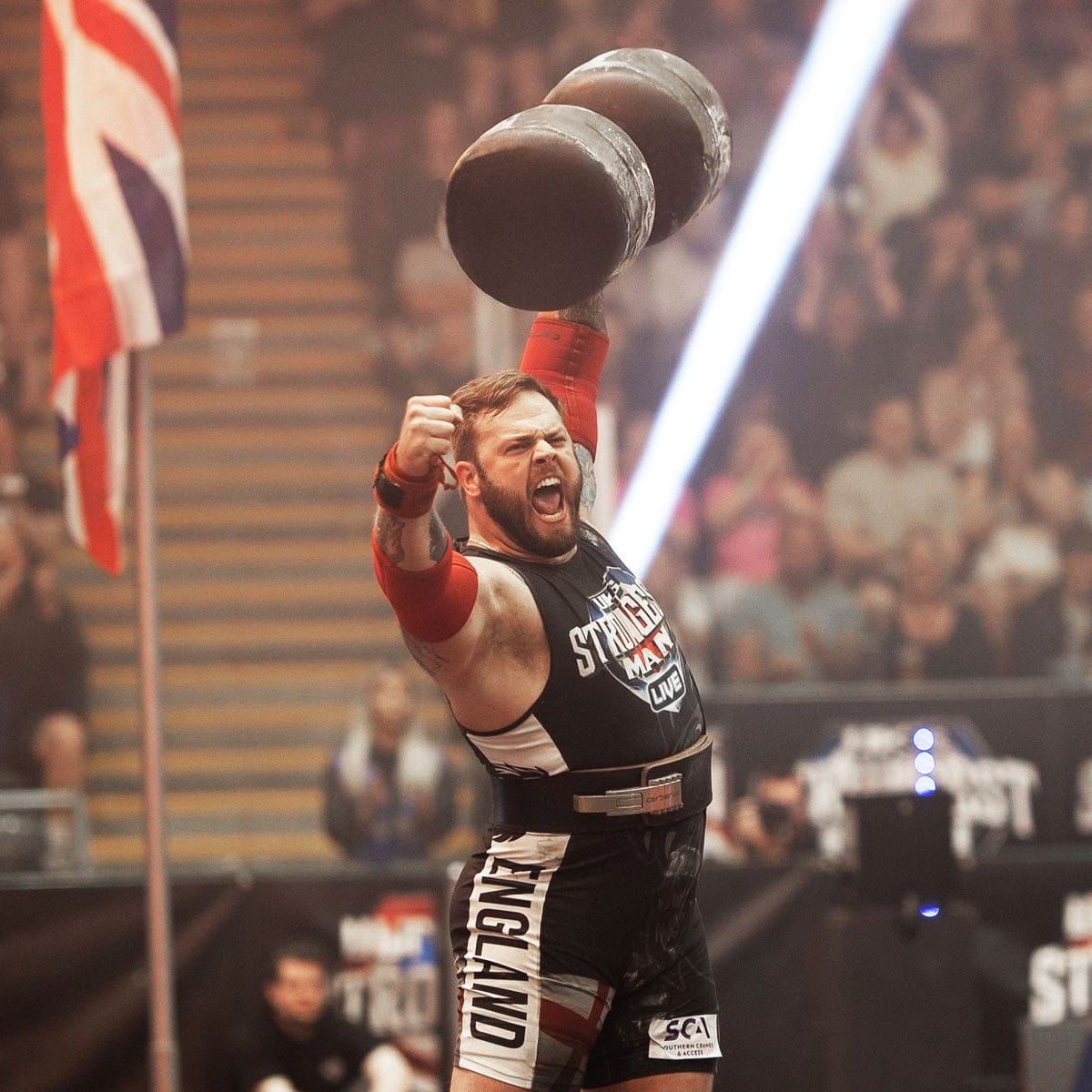



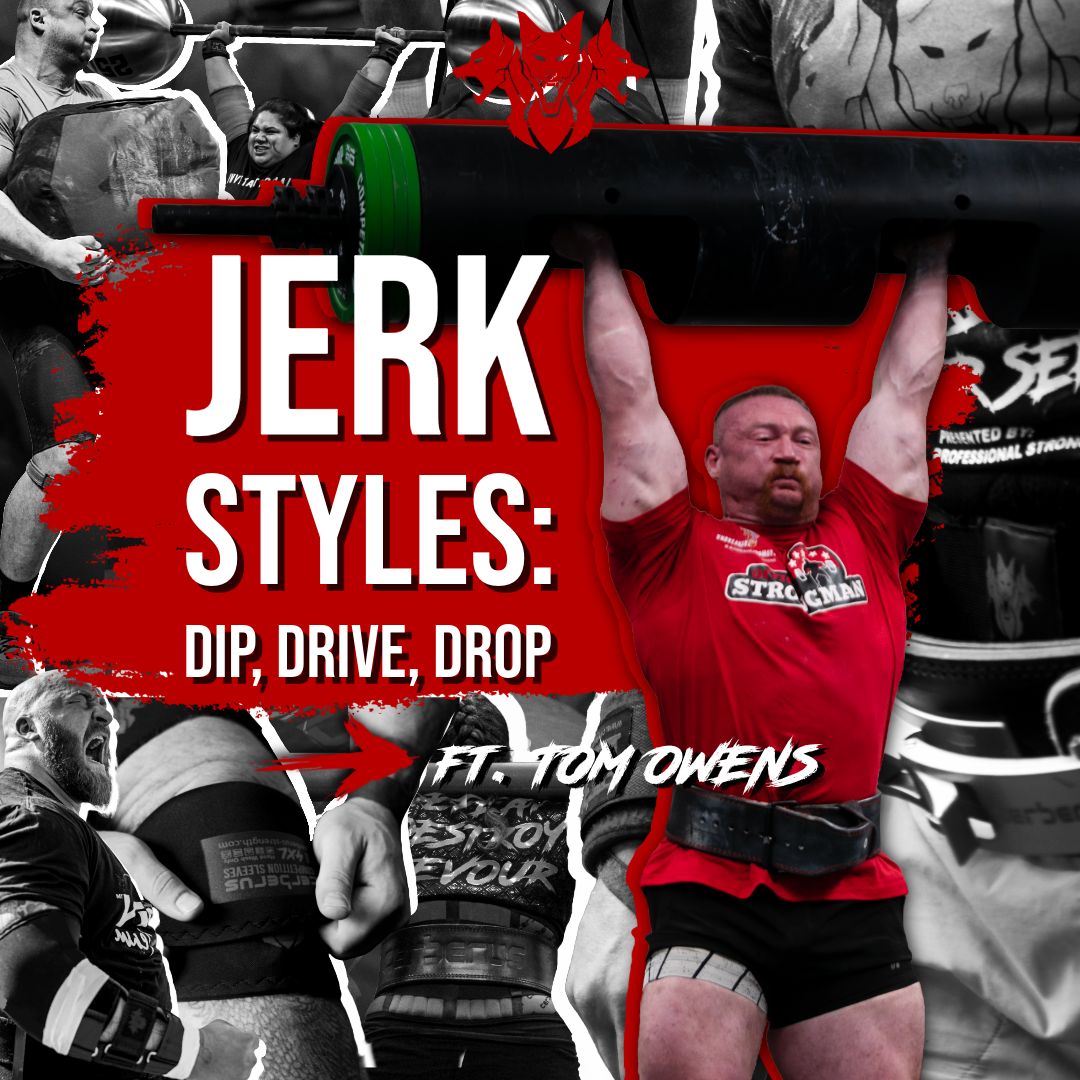
There are numerous techniques in the sport of strongman for getting an implement from the chest to overhead. The most common we see is push press but are there more effective ways to get things overhead and are they situational?
Jerks are a great way to get weight overhead, more efficient than pressing when done correctly and can yield higher maximal results. Yet some athletes still opt to go without, why?
Technical requirements. Jerks are a much more complex series of movements than your basic push press. They require not only good technique but also maximal speed. All jerk styles require a dip, a drive and then a drop where you move your body underneath the implement to get into a “catch” position. Yes its a throw and a catch, which under heavy loads can seem terrifying.
The idea of a jerk is to move the implement upwards before moving yourself downwards, to almost “meet half way” increasing the amount of weight that can be put overhead for the same force output.
Important things to note with a jerk catch. Its about stacking the joints in the catch position, we want to catch with our head through and our arms fully locked out. If either of these things aren’t present then instability will be high.
So what different types of jerks do we have in our arsenal?
Push jerks, the least explosive of the bunch. They don't require the user to change the stance to hit the catch position. They simply require a dip, drive and a drop in place. Ideal for rep events when the weights are manageable and you’re wanting to cycle quickly through repetitions. Because the stance doesnt change you wont need to reset your feet to get a down command from your referee, ergo it is quicker. Really useful in rep events where you’re looking at maximizing reps in 60s or smashing quickly through an overhead ladder as it is faster than a press.

Power jerks, incredibly explosive requiring the athlete to change to a wider stance during the drop into the catch. “Think dip and drive in your pressing stance and catch in your squatting stance”. Because the stance widens this allows more space to get under the implement allowing more weight to be lifted. Power jerk is also much more beginner friendly than split jerks and can often yield similar results in terms of maximal loads. Power jerks are great for max overhead events or rep events where you’re looking at getting 2-4 reps

Split jerks, the king of all jerks. Split jerks require the most lower body movement of them all with the feet splitting front and back allowing the athlete to get even further under the implement. This generally gives the best bang for your buck in terms of weight moved overhead but it also the most fatiguing of the bunch, requiring a longer reset after the catch to get a down command from the referee. Split jerks are ideal for max overhead events or rep events where you’re looking at 1-3 reps.

However just because these things are useful in certain situations doesn’t mean they are not interchangeable depending on the scenario. For example an overhead ladder you may want to look at pressing the first 1-2 bars and then split jerking the final 2 bars to save time or split jerking all 4 to preserve energy in terms of time under tension.
In short learning these movements in strongman is essential in becoming a better athlete. Strongman is all about adaptability and athleticism and if you don’t get with the times you’ll be left behind.